Golden State Warriors

Analyzing the Warriors’ Options at Backup Point Guard

Pic1

This article was originally published on Let’s Go Warriors.

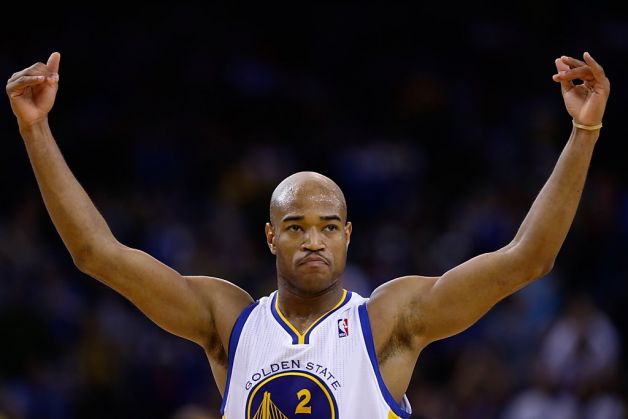
Since Jarrett Jack signed a four-year, $25 million deal with the Cleveland Cavaliers, the Golden State Warriors and Mark Jackson will have to address who will play the majority of the minutes at the backup point guard position.

The Warriors have several possible candidates. The first is Toney Douglas, who the Warriors signed as a free agent. Douglas is a quality defender who is quick, gets deflections, gets steals, and strongly pressures the ball. He’s also a decent three-point shooter. Last season, he shot 38.9 percent from three, matching a career-high.

The second option is Kent Bazemore, who was excellent in the 2013 Las Vegas Summer League and was named to the All-Summer League Team after averaging 18.4 points, 4.6 rebounds, and 3.1 assists in seven games. Bazemore’s strongest asset is his defense. He needs to prove that he can become more of a scorer and a better decision-maker as a point guard.

The third option is Nemanja Nedovic, who was selected with the 30th overall pick in this year’s draft. He officially signed with the Warriors after reaching a buyout agreement with his current team, Lietuvos Rytas of the Lithuanian A League. Nedovic is athletic, quick, and aggressive. He’s not afraid to attack the rim, and he’s excellent in the open court. He’s also a decent three-point shooter. He can still improve his decision-making, his defense, and his shooting.

The last option is Andre Iguodala, who will most likely start at small forward, but he could see some time as the backup point forward. Iguodala is a versatile player who can play several positions. He has averaged 4.9 assists over his career. Iguodala also likes to drive to the basket, so, as a point forward, he could help the Warriors in drive-and-kick situations.

Both Joe Lacob and Jackson have discussed how Iguodala can fill many roles for the Warriors. He probably won’t be the primary backup point guard though.

Jackson also saw Nedovic play in a couple of the Warriors’ practices during Summer League and liked what he saw.

“He’s a guy that can run a team, has a great feel for the game, and has a bright future, so we’re excited about having the opportunity of having here moving forward,” Jackson said about Nedovic.

When asked if Bazemore will earn more minutes this upcoming season because of his play in Summer League, Jackson mentioned that he admires how Bazemore continues to improve, works extremely hard, and stays ready. However, it didn’t sound like Jackson was quite ready to give him significant minutes at the backup point guard position.

“At the end of the day, we’re loaded,” Jackson said. “We’ve got five perimeter players that are better basketball players today than he is, and our three wing guys and Steph Curry and also Toney Douglas, who we picked up. These guys are legitimate players, so… We’ll see how it pans out, but he’s a guy I have a lot of confidence in, and he’s certainly separated himself during this summer.”

Based on what Jackson said, it seems like Douglas will play the majority of the minutes at the backup point guard position. Jackson and Lacob have to admire Douglas’ effectiveness on defense and his experience in this league, which will be significant assets off the bench. The Warriors’ rotation and minutes will most likely be determined in training camp and in the preseason, but, as of now, Douglas is the Warriors’ backup point guard.

Golden State Warriors: Are They Championship Contenders?

This article was originally published on Golden Gate Sports.

May 16, 2013; Oakland, CA, USA; Golden State Warriors point guard Stephen Curry (30, left) and power forward David Lee (10, right) react after game six of the second round of the 2013 NBA Playoffs against the San Antonio Spurs at Oracle Arena. The Spurs defeated the Warriors 94-82. Mandatory Credit: Kyle Terada-USA TODAY Sports

The Golden State Warriors had a breakout 2012-2013 season. The Warriors defied expectations and captivated many basketball fans around the nation with their stellar, exciting play.

After their incredible playoff run last year, are the Warriors championship contenders now? They’re certainly close to becoming one of the superior teams in the Western Conference, but they’re not quite a championship contender yet.

One of the reasons why is because of the immense amount of talent in the Western Conference. The Oklahoma City Thunder, San Antonio Spurs, Los Angeles Clippers, and Houston Rockets are among the elite teams in the Western Conference, and some of them could very well contend for a championship. Out of all those foes, it will be tough for the Warriors to even become one of the top-four teams in the Western Conference.

Even if the Warriors are able to become Western Conference Champions, it will still be a long road to their first championship since 1975. Outside of the Western Conference, some of the biggest championship contenders are the Miami Heat, the Chicago Bulls, and the Indiana Pacers.

Even though the Warriors aren’t quite as established and experienced as some of the previously mentioned teams, the Warriors could certainly become a top-four team in the Western Conference this season. Here are some reasons why the Warriors are close to becoming contenders:

How Much Will the Warriors Miss Jarrett Jack?

628x4717

This article was originally published on Let’s Go Warriors.

Despite an exciting offseason for the Golden State Warriors, they, unfortunately, weren’t able to re-sign their sixth man from last season, Jarrett Jack. The Warriors had to renounce their Bird Rights on him in order to acquire Andre Iguodala. Jack signed a four-year, $25 million deal with the Cleveland Cavaliers instead.

Jack was a fan favorite. Off the court, he always had great energy, was engaging with the fans, and constantly showed his gratitude for the fans.

On the court, Jack used his infectious energy and toughness effectively in the sixth-man role. Jack averaged 12.9 points and 5.6 assists in 79 games last season, and, in the postseason, he averaged 17.2 points and 4.7 assists. He also finished third in the NBA’s Sixth Man of the Year Award voting.

Jack’s toughness and his ability to attack the basket provided the perfect balance to Stephen Curry’s unbelievable three-point shooting. When he played alongside Curry, he played point guard, which allowed Curry to slide over to the shooting guard position, so Curry could focus more on shooting than distributing.

The Warriors will also miss Jack in clutch situations. He hit several big shots during the regular season, and, in Game 4 against the San Antonio Spurs, he converted on three big shots in a 69-second stretch late in the fourth quarter to help send the game to overtime. Jack also went 5-for-5 in the last 17 minutes of the game.

Although he hit some clutch shots in the postseason, Jack also had several costly turnovers and defensive lapses. In the postseason, Jack averaged 3.2 turnovers and only 4.7 assists. In Game 1 against the Spurs when Manu Ginobili hit the game-winning three, Jack should’ve been the one to rotate over to him and contest the shot.

Some other aspects of Jack’s game that Warriors fans won’t miss is his indecisiveness and bad shot selection at times. On many possessions, Jack would dribble too much and with no purpose or definite plan. Then when the shot clock was about to expire, he’d had to force a tough shot. Other times, he would put up a contested elbow jumpshot, early in the shot clock, before letting a play fully develop.

These types of shots were maddening and quite reminiscent of when Monta Ellis played for the Warriors. Both Jack and Ellis showed a lack of awareness at times. They were so focused on what they could do in the possession that they would miss, for example, Curry wide open for three. Just like when Ellis was a Warrior, Jack’s type of play often took opportunities away from Curry.

Although Jack played well alongside Curry most of the time, Curry will benefit more when he’s able to play alongside Iguodala. First of all, Iguodala is expected to play some minutes as a point forward, which will allow Curry to play off the ball again. Iguodala is a much better decision maker than Jack, and since he drives to the basket more than Jack did, he will draw more attention from the defense, which will free up Curry for threes. Second of all, if Curry is having trouble hitting big shots, Iguodala is a viable option in the clutch.

The Warriors have several players who can pick up the slack at the backup point guard position. Although Toney Douglas and Kent Bazemore aren’t quite the scorers that Jack was, they’re much better defenders. Nemanja Nedovic isn’t known for his defense, but he is much more athletic than Jack, so he can get to the rim much more easily.

Even though Jack was a valuable asset to the team last season, the Warriors made up for his loss with other players who can collectively bring similar, or better, skills. The Warriors wouldn’t have had as successful a season without Jack, but they are still equipped to make another strong playoff run without him.

Why Andre Iguodala Will Help Harrison Barnes’ Development

hi-res-167303829_crop_exact

This article was originally published on Let’s Go Warriors.

Many fans have feared that the Golden State Warriors’ addition of Andre Iguodala will stunt Harrison Barnes development. In fact, the opposite is true. If Iguodala starts and Barnes comes off the bench, this will actually help Barnes develop into a better player. Here are three reasons why:

1. Both Iguodala and Barnes have similar skillsets, so Iguodala will be a valuable mentor to Barnes, especially defensively.

Both Iguodala and Barnes are strong, athletic, and quick. Offensively, they play fairly similarly. They both like to drive to the basket using their quickness, they’re both explosive, and they can shoot threes pretty well.

Iguodala’s mentoring will help Barnes’ offensive game grow, but it will be even more valuable to Barnes on the defensive end. One of Iguodala’s strengths is his defense and his ability to guard multiple positions. Iguodala can use his expertise to teach Barnes how to become a better and more versatile defender. In addition to his defensive prowess, Iguodala’s veteran leadership and work ethic will set a great example for Barnes.

2. With Iguodala starting, it will allow Barnes to play more minutes at the power forward position, which he excelled at in the postseason.

The Warriors will most likely start Stephen Curry, Klay Thompson, Iguodala, David Lee, and Andrew Bogut. However, Mark Jackson will certainly want to utilize a smaller lineup, in order to play at a faster pace. At any point in the game or even when finishing games, Jackson could decide to use a lineup of Curry, Thompson, Iguodala, Barnes, and Lee or Bogut.

With Barnes at the power forward position, the Warriors would be able to get into transition and spread the floor more. In the postseason, the Warriors thrived in these scenarios, especially because Barnes’ skillset matches up with the power forward position so well. He has great footwork in post-up situations, he’s faster than most power forwards, and he’s strong enough to keep up with bigger power forwards. Playing Barnes at power forward will benefit not just the Warriors, but also Barnes’ development.

3. With Iguodala starting and Barnes coming off the bench, Barnes will be able to play against the reserves of the opposing team, which will allow him to dominate offensively.

Coming off the bench, Barnes won’t have to share as many scoring opportunities with Curry, Thompson, and Lee. Instead, he will become the go-to scorer off the bench for the Warriors. If he’s playing alongside Toney Douglas, Kent Bazemore, Nemanja Nedovic, or Marreese Speights, he will become the first option on offense. He will be able to showcase his game even more against the reserves of the opposing team. Barnes would provide that instant scoring and energy off the bench that the Warriors lost when Jarrett Jack didn’t re-sign.

Instead of going up against LeBron James or Kevin Durant, he’d probably be facing the small forward or power forward in the opponents’ weaker lineup. This would allow him to take advantage of his superior speed and athleticism. In addition, when Barnes does play alongside Iguodala, Iguodala can defend the elite players like James or Durant, and Barnes can play more freely on offense and defense.

Fans fear that Barnes will play less minutes now, given Iguodala’s presence, and that this will hinder his development. However, whether Barnes starts or not, he will probably play around 25-30 minutes per game anyway, because of his skillset and value to this team. Also, even if he doesn’t start, Barnes could still finish games for the Warriors, if they choose to go small, or if someone is in foul trouble, much like how Jack finished games for the Warriors last year.

Barnes has incredible potential, so it’s understandable why fans could be worried about Iguodala hindering Barnes’ development. However, once the regular season starts and fans are able to see Iguodala’s game, they will see the positive impact that he will have on Barnes’s development. Even with Iguodala starting, Barnes could still have a breakout year for the Warriors next season.

Let’s Go Warriors 2012-2013 Report Cards: Harrison Barnes

150560690_crop_exact

This article was originally published on Let’s Go Warriors.

Harrison Barnes showed his massive potential in his rookie season with the Golden State Warriors. Off the court, he has a veteran demeanor in that he’s extremely hard-working, professional, confident, and dedicated to improving his game and helping the team win.

On the court, Barnes was the X-factor the Warriors last season. He’s athletic, explosive, and quick. He has a good shooting motion, and he has a high basketball IQ. He knows that when he’s going up against a bigger defender, he should use his speed to beat them. When he’s going up against a smaller defender, he knows to use his strength to out-muscle them.

In the regular season, Barnes averaged 9.2 points, 4.1 rebounds, 1.2 assists, 43.9 percent shooting, 35.9 percent shooting from three, 75.8 percent free-throw shooting in 25.4 minutes per game in 81 games.

ASSOCIATED PRESS

ASSOCIATED PRESS

Barnes likes to drive to the basket and show off his athleticism and explosiveness. He uses pump-fakes to beat his defender, and he uses his speed to get to the rim, instead of always settling for threes. However, this skillset wasn’t always utilized in the regular season. Instead, he got most of his shots on spot-ups and isolations.

He was solid in the regular season, but not quite as spectacular as he was in the postseason when he started to show his true potential. He averaged 16.1 points, 6.4 rebounds, 1.3 assists, 44.4 percent shooting, 36.5 percent shooting from three, 85.7 percent free-throw shooting in 38.4 minutes per game in 12 games.

In the postseason, Barnes showed how confident he is, how he takes good shots, and how he isn’t afraid of the extra pressure in the playoffs. With Stephen Curry injured, Klay Thompson struggling, and David Lee out with his right hip flexor injury, Barnes often became the Warriors’ biggest offensive threat in the postseason.

The Warriors took advantage of his great footwork in post-up situations, his speed, and his strength when they played him at the power forward position. He thrived in that role, because he’s faster than most power forwards, but he has the strength to keep them out of the paint.

In the playoffs, Barnes knew he was the most athletic player on the court, so he used it to his advantage. In the Warriors’ series against the San Antonio Spurs in the Western Conference Semifinals, he would post up Tony Parker and score rather easily, and he wasn’t afraid to go right at Tim Duncan.

In Game 5 against the Denver Nuggets, Barnes also showed how he can take over a game when his teammates are struggling. He hit three three-pointers in the first quarter when others were struggling to score, and he really carried the Warriors for much of the first half. Barnes finished Game 5 with a team-high 23 points, nine rebounds, two steals, and one block. Barnes certainly carried himself like a veteran in Game 5.

AP Photo/Eric Gay

AP Photo/Eric Gay

In the Warriors’ series against the Spurs, Barnes had 19 points and 12 rebounds in Game 1, he had 26 points and 10 rebounds in Game 4, and he had 25 points and seven rebounds in Game 5.

“The guy has grown up before our very eyes,” Mark Jackson said. “He had an off the charts regular season, which put us in position to be the sixth seed. He has elevated his game in the postseason… He’s a guy that’s not afraid of the moment, obviously a guy that embraces the bright lights.”

Barnes certainly has a lot of potential to become a star in the NBA. Next season, he can improve on his off-ball defense and his shooting. He will also probably come off the bench next season because of the Warriors’ acquisition of Andre Iguodala.

However, this will not stunt his development. First of all, coming off the bench would allow Barnes to play against the reserves of the opposing team, which would allow him to dominate offensively. Second of all, the addition of Iguodala is a blessing in disguise for Barnes. Although he probably won’t start anymore, Igudoala would be a great mentor for Barnes. Iguodala could use his defensive expertise to help Barnes grow as a defender, and his veteran leadership and work ethic will set a great example for Barnes.

Barnes has amazing work ethic for a rookie, and, in the playoffs, he showed his veteran demeanor by remaining confident and consistent. The sky is the limit for Barnes, and he will have a breakout season for the Warriors next year.

BarnesGrade

Let’s Go Warriors 2012-2013 Report Cards: Klay Thompson

7285652

This article was originally published on Let’s Go Warriors.

Klay Thompson had a solid sophomore season for the Golden State Warriors last year. He played in all 82 games, and he averaged 16.6 points, 3.7 rebounds, 2.2 assists, and 1.0 steal on 42.4 percent shooting, 40.1 percent shooting from three, and 84.1 percent free-throw shooting.

As many Warriors fans know, Thompson is known for his three-point shooting, but he’s started to show that he’s not just a catch-and-shoot player. Thompson has shown that he can create his own shot off the dribble, off a fadeaway, and off a pump fake from two-point range and from three. He doesn’t often need to do this though because of his perfect form and quick release of his jump shot.

Thompson put on some incredible shooting displays in the playoffs. For example, in Game 1 in the Warriors’ first round series against the Denver Nuggets, Thompson had a great all-around game scoring 22 points and three blocks on 52.6 percent shooting and 40 percent shooting from three. In Game 2 of that series, he scored 21 points, extremely efficiently, on 72.7 percent shooting and 83.3 percent shooting from three.

(Doug Pensinger/Getty Images)

(Doug Pensinger/Getty Images)

Also, in Game 2 in the Western Conference semifinals series against the San Antonio Spurs, Thompson had 34 points and 14 rebounds on 50 percent shooting and 88.9 percent shooting from three.

Thompson and Stephen Curry, the Splash Brothers, create quite the three-point shooting tandem for the Warriors. They are both so lethal from three-point range that it creates all kinds of matchup problems for their opponent, and it’s hard to contain both of them in one game. The Splash Brothers were arguably the best shooting backcourt in the NBA last season.

Last season, Thompson expanded his game beyond just being an excellent shooter. Thompson became the Warriors’ best perimeter defender. He uses his size (6’7″) and length so effectively, in order to stop smaller guards from shooting mid-range jumpers or driving into the lane. Thompson shut down Ty Lawson in the series against the Nuggets, and he also did a fantastic job slowing down Tony Parker and bothering Manu Ginobili in the series against the Spurs.

Going into his third season in the NBA, Thompson still has room for improvement though. First of all, he needs to become more consistent. After his miraculous Game 2 against the Spurs, he shot 34 percent from the field for the rest of the series, and, in games 4-6, he failed to make a three-pointer.

Also, on the defensive end, he needs to be more consistent about limiting his fouls. In Game 1 of the Western Conference semifinals against the Spurs, the Warriors were up by 16 points and Thompson fouled out with 3:57 left in the fourth quarter. At that point, Thompson had limited Parker to 12 points on 4-of-15 shooting. The Spurs then went on a 18-2 run to send the game to overtime. In that span, Parker scored six points on 3-of-3 shooting, since he was able to score more freely without Thompson guarding him. Thompson needs to find a way to stay on the floor and limit his fouls.

(Troy Taormina-USA TODAY Sports)

(Troy Taormina-USA TODAY Sports)

Second, Thompson can improve on attacking the basket more and finishing. There were several times last season when Thompson would drive to the basket and would miss a fairly wide-open layup, which fans stared to call a “Klayup.” It didn’t appear that Thompson had trouble getting to the rim, but he couldn’t always finish. Thompson needs to use his quickness more to attack the basket, because as he converts on more of those shots, it will cause defenders to lay off him a little more on the three-point line, in order to prevent him from driving to the basket. Once he’s more comfortable with that, hopefully, finishing the play will become easier.

If Thompson can become more consistent on offense and defense, limit his fouls, and drive to the basket more often and more effectively, than he will become one of the Warriors’ best players, alongside Curry. His development is key to the Warriors’ success.

KlayGrade