
Seth Curry is focused, excited, and ready to go. Entering his first NBA training camp, Curry is 100% healthy, and he’s ready to contribute to the Golden State Warriors.
Read the rest of the article on Let’s Go Warriors.
Seth Curry is focused, excited, and ready to go. Entering his first NBA training camp, Curry is 100% healthy, and he’s ready to contribute to the Golden State Warriors.
Read the rest of the article on Let’s Go Warriors.

The Currys are all about family. Dell Curry even said it himself. At the State Farm Dell and Stephen Curry Parent/Child Basketball ProCamp this weekend, Dell told all the participants that family is the most important thing to the Currys. Anyone in attendance could see the camp’s focus on family bonding, not just basketball.
Read the rest of the article on Let’s Go Warriors.

Mar 24, 2013; Philadelphia, PA, USA; Duke Blue Devils guard Seth Curry (30) celebrates making a basket during the second half against the Creighton Bluejays during the third round of the NCAA basketball tournament at Wells Fargo Center. Duke defeated Creighton 66-50. Mandatory Credit: Howard Smith-USA TODAY Sports
This article was originally published on Golden Gate Sports.
There’s a new Splash Brother in town. The Golden State Warriors signed Seth Curry, Stephen Curry’s younger brother, to a non-guaranteed contract on August 23rd, which happened to be his birthday. Curry went undrafted out of Duke University. Since his contract is non-guaranteed, he will have to earn his spot onto the active roster, but there’s a good chance he will be able to grab one of those final roster spots.
Even if Curry makes the final roster, it’s unclear how many minutes, if any, he’ll play this upcoming season. Curry could end up playing with the Santa Cruz Warriors for parts or the majority of the season, like what the Warriors did with Kent Bazemore during last season. If Curry gets any playing time, it will most likely be in garbage time when the Warriors have a significant lead or are down by a large amount.
Regardless of how many minutes Curry plays for the Warriors this season, he provides a skill that any NBA team could use. He’s an incredible shooter, just like his brother. In his final season at Duke, Curry averaged 17.5 points on 46.5 percent shooting from the field and 43.8 percent shooting from three.
He was able to shoot this well despite having a stress fracture in his right shin. He sat out almost all of Duke’s practices, so he could rest, not risk further injury, and conserve his energy for games. After successful surgery and rehab on his shin, Curry is ready to play basketball again and help out the Warriors in any way he can.
“I’m an established shooter who can come in right away and not go through an adaption period to the NBA,” Curry said. “I’ve been around this game my whole life. I can come in right away and fill a need. It helped that I spent four years in college, too.”
Curry’s biggest strength is obviously his shooting. He can shoot from anywhere on the floor, and he can create his own shot too. He’s not just a catch-and-shoot player. He’s not super quick or athletic, but he finds ways to get to the basket. The Warriors don’t have many three-point shooters on their bench, so Curry’s pinpoint shooting could certainly make him a valuable asset to this team.

Mar 9, 2013; Chapel Hill, NC, USA; Duke Blue Devils guard Seth Curry (30) shoots in the first half at the Dean E. Smith Center. Mandatory Credit: Bob Donnan-USA TODAY Sports
There are a few areas in which he can improve though. He became a better defender over his college career, but he can still improve. He could also improve on rebounding. Curry only averaged 2.5 rebounds last season at Duke. He’s only 6’3″, so he’s not expected to rebound like David Lee. However, he could earn more playing time if he crashes the boards more. Also like his brother, he could bulk up a little more. This would help him rebound more too.
The biggest part of Curry’s game that he can improve on is his playmaking ability. As mentioned before, Curry is 6’3″, so he’s a little small for a shooting guard, which is his primary position. Curry is a combo guard, but he didn’t get much experience playing point guard at Duke. He played point guard for parts of his junior season, but he’s naturally more of a shooting guard, so he ended up playing the majority of his minutes at that position.
Last season at Duke, Curry averaged only 1.5 assists. If he wants to earn more minutes with this Warriors team, he has to work on his playmaking. With the additions of Toney Douglas and Nemanja Nedovic, Curry won’t be expected to be the primary point guard, but, by learning to get his teammates involved more, it will make him more of a versatile player.
Since he’s such a good three-point shooter, defenders will likely try to chase him off the three-point line. If he added a pump fake to his game, he could then drive to the basket and swing the ball out to an open teammate. Stephen has mastered this skill, and if Seth can learn this from his brother, he could become a valuable asset to this team.
Seth Curry is somewhat of a long-term project for the Warriors. However, he will be worth the wait. He’s a hard worker, he’s passionate, and he’s determined to get better and learn as much as he can. He’s also extremely close to Stephen, and those two will push each other to be better. Plus, having Seth on the team is certainly a big marketing opportunity for the Warriors.
The newest Splash Brother is in town, and he’s going to do everything he can to make a splash with the Warriors.
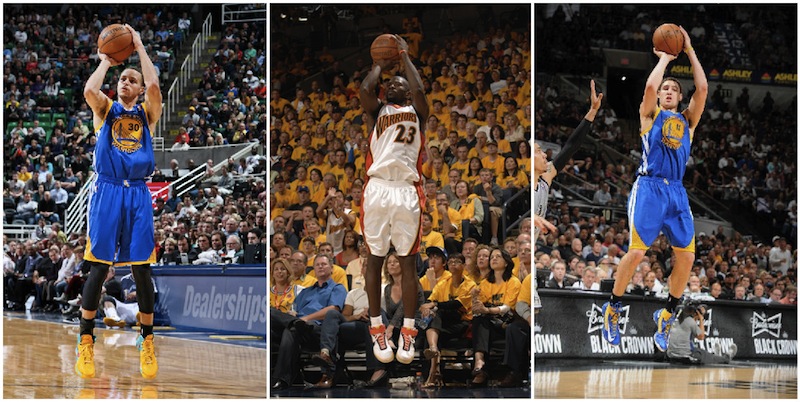
The three-point shot has changed the game of basketball. Not only has it changed many offensive schemes for teams, but it has also changed the roles of certain players.
Read the rest of the article on Let’s Go Warriors.
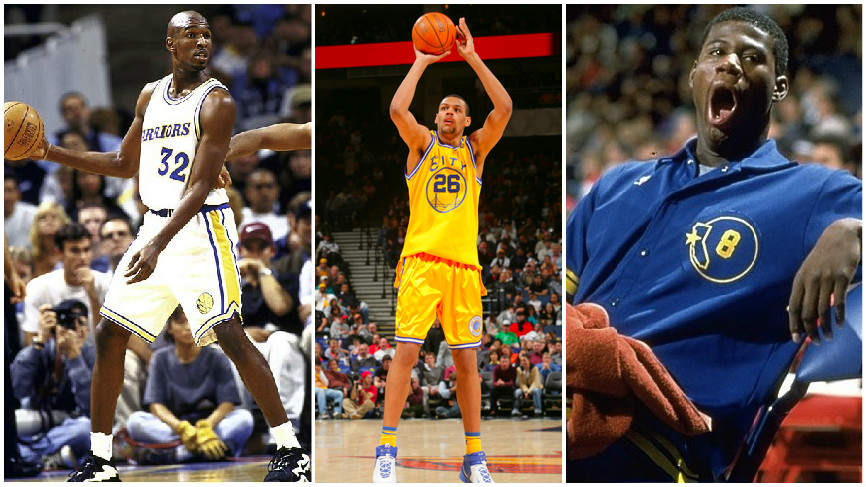
After examining the best draft picks in Golden State Warriors history, it’s time to look at some of the worst draft picks.
Read the rest of the article on Let’s Go Warriors.

This article was originally published on Let’s Go Warriors.
Last season, the Golden State Warriors clinched their second playoff berth in just 19 seasons. The franchise hasn’t experienced much success in recent history, but the Warriors made those two playoff appearances because of a few key trades.
The following three trades are not listed in any particular order. Here are three of the best trades in Warriors history:
Trade #1: On January 17, 2007, the Warriors acquired Al Harrington, Stephen Jackson, Sarunas Jasikevicius, and Josh Powell from the Indiana Pacers for Mike Dunleavy Jr., Troy Murphy, Ike Diogu, and Keith McLeod.
This trade was significant, because it led to the “We Believe” era. The Warriors were 19-20 when the trade was made, and, after the trade, the Warriors offense drastically improved. The Warriors finished 42-40 and earned the eighth seed in the playoffs. The Warriors finished the season over .500 for the first time in over a decade. In the playoffs, the Warriors went on to upset the number one seed in the Western Conference, the Dallas Mavericks.
The Warriors finally had a star in Jackson, and Harrington allowed the Warriors to go small and play the run-and-gun style that was so successful. Captain Jack and Harrington truly re-vamped this Warriors team and helped turn them into one of the most exciting, entertaining teams in the NBA.
Trade #2: On February 24, 2005, the Warriors acquired Baron Davis from the New Orleans Hornets for Speedy Claxton, Dale Davis, and cash.
Davis was a transformational force for the Warriors. Before this trade, the Warriors hadn’t had a true franchise player since the Run TMC era. Davis gave them that. Warriors fans immediately loved Davis for his exciting, confident style of play.
As a Warrior, Davis averaged more than 20 points, eight assists, two steals and nearly five rebounds per game. He is among the franchise leaders in three-point field goals, three-point field goal attempts, points per game, assists per game, steals per game, etc. Davis helped turn a Warriors team that had been so bad for so long into a playoff contender.
Trade #3: On March 13, 2012, the Warriors acquired Andrew Bogut and Stephen Jackson from the Milwaukee Bucks for Monta Ellis, Ekpe Udoh, and Kwame Brown.
This trade was a controversial one for many fans, since Ellis was a fan favorite at the time. However, this is, arguably, the most impactful trade in Warriors history. The Warriors weren’t going to become a legitimate force in the Western Conference with Ellis on their team. He was too selfish, and he wasn’t the leader that the Warriors needed.
By acquiring Bogut, the Warriors finally had that dominant inside presence that they hadn’t had in so long. Although Bogut was injured when they traded for him, he was exactly the type of center the Warriors needed. He’s a defensive-minded beast who plays with a constant stream of effort. Bogut wasn’t able to play all of last season, but every Warriors fan could see how dominant the Warriors could be when Bogut was on the floor.
His presence alone altered an opponent’s offensive approach. If a player was even able to get to the basket, there was a good chance Bogut was going to block their shot or, at least, alter their shot and snag the rebound. If the Warriors can get at least 60 or 70 games out of Bogut this season, then they will certainly be one of the strongest teams in the Western Conference.
With all that being said, which trade do you think was the best trade in Warriors history?
 The 3rd Sister